Structural heat elevation offers a non-toxic method to penetrate dense architecture where topical sprays fail to reach dormant eggs. FalconVale Insect Services applies targeted thermal remediation by raising ambient…
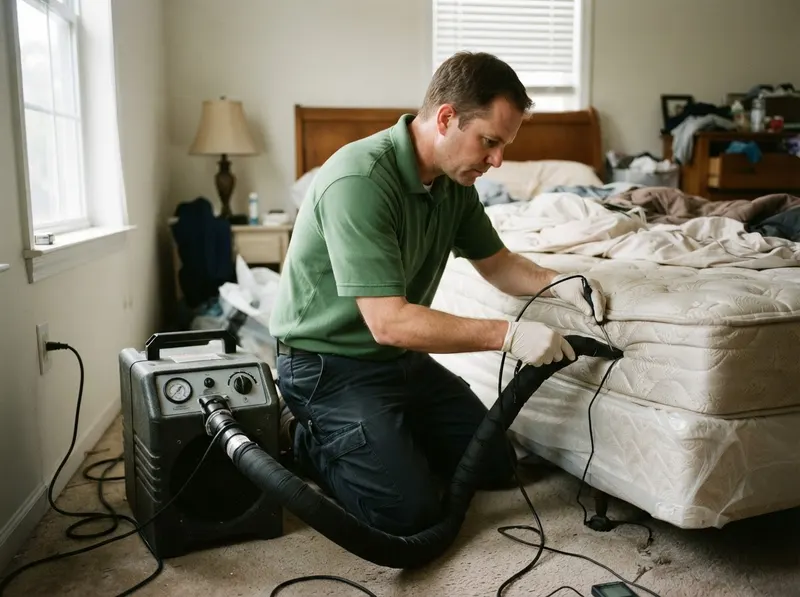
Structural heat elevation offers a non-toxic method to penetrate dense architecture where topical sprays fail to reach dormant eggs. FalconVale Insect Services applies targeted thermal remediation by raising ambient room temperatures using specialized electric heaters monitored by digital thermocouple sensors. According to research published by the Journal of Economic Entomology, sustained exposure to core temperatures above 122°F yields complete mortality across all bed bug life cycles within minutes. Historic heart-pine subfloors and tongue-and-groove lath assemblies throughout Radcliffeborough and Harleston Village harbor expansive microscopic voids where insects escape liquid contact barriers. Precision convection circulation pushes target temperatures behind baseboards and into structural wall cavitations without damaging historic framing or antique heartwood.
While whole-room thermal heating provides total mortality for unshielded insects, precision remediation complements heating through strategic placement of amorphous silica gel and localized insect growth regulators. Guidelines from the U.S. Environmental Protection Agency emphasize that integrated pest management delivers the most reliable defense against re-infestation. Technical equipment and specialized airflow patterns require careful calibration around coastal relative humidity. Elevated moisture levels documented by the National Weather Service Charleston Office can insulate pests within deep framing dampness if convective blowers are improperly positioned. Applying desiccant dusts behind electrical faceplates and interior perimeter transitions creates a protective barrier that stays active long after room temperatures normalize.
Deciding between whole-structure thermal heat and spot liquid applications centers on infestation dispersion and wall composition. Spot chemical controls provide lower upfront cost for early, isolated introductions confined to a single mattress seam, but they carry the trade-off of requiring 2 to 3 repeated visits to target emerging nymphs as eggs hatch. Whole-structure thermal remediation resolves deep multi-room infestations in a single 8-hour operation, though it requires homeowners to clear heat-sensitive personal belongings such as wax candles, vinyl records, and pressurized canisters. Homeowners in slab-on-grade builds in Daniel Island and Cainhoy Peninsula experience rapid thermal retention, whereas elevated pier-and-beam foundations common in Wagener Terrace, James Island, and West Ashley require underside air-dam seals and floor-directed airflow to ensure structural baseplates hit the lethal 125°F threshold.
FalconVale Insect Services adheres to strict containment and environmental safety standards during thermal applications. The Centers for Disease Control and Prevention note that while bed bugs do not transmit blood-borne pathogens, the psychological toll, sleep interruption, and secondary skin irritations demand immediate domestic restoration. In coastal properties near the Arthur Ravenel Jr. Bridge and College of Charleston Campus, high turnover in multi-family units accelerates pest transfer along shared wall plumbing traces. All treatments incorporate non-staining botanical or desiccant barriers governed under Clemson University Department of Pesticide Regulation standards, ensuring historic trim, antique heart pine, and modern living spaces receive balanced, low-toxicity remediation without lingering chemical aromas.
Every job gets a firm, written price after a free on-site visit.
Tell us about your bed bug thermal and precision remediation job in Charleston and we'll send a clear, written quote, usually the same day.
 FalconVale Insect Services