FalconVale Insect Services logoFalconVale Insect Services
Fast, upfront pest control service in Charleston, SC, free quote in minutes

Pest Control Service Charleston

FalconVale Insect Services provides comprehensive integrated pest management and targeted Pest Control Service in Charleston to restore household sanctuary across historic downtown boroughs, marshfront estates, and coastal suburban properties. Charleston County residences face aggressive year-round pest pressure due to dense maritime humidity, expansive tidal marsh borders, sandy soils, and historic crawl space foundations that shelter invasive wood-destroying insects and nocturnal pests.

Get your free pest control service quote, Charleston

We only use your ZIP to check availability, no spam.

Subterranean and Formosan Termite ControlPalmetto Bug and American Cockroach EradicationCrawl Space Encapsulation and Pest Exclusion
Pest Control Service in Charleston, SC
Pest Control Servicein Charleston, SC

What is Pest Control Service in Charleston, SC?

Pest Control Service in Charleston is a specialized environmental management process that eliminates invasive coastal insects, establishes perimeter chemical and physical barriers, and safeguards Lowcountry architectural structures against wood-destroying organisms.

Why homeowners choose FalconVale Insect Services

  • ✓Initial diagnostic pest evaluations establish an on-site treatment plan starting at the baseline minimum of $200, with final costs confirmed during physical crawl space and perimeter inspections.
  • ✓Formosan subterranean termite swarms peak heavily between late April and early June across Charleston, requiring structural bait installations and deep liquid barrier treatments to protect framing timbers.
  • ✓American cockroaches, known locally as palmetto bugs, enter historic raised foundations through weeping mortar, sewer vent lines, and moisture-laden subfloors during sustained summer dew points.
  • ✓Biting midges (no-see-ums) and coastal mosquitoes demand bi-weekly to monthly adulticide applications and larvicide treatments along tidal margins and standing water buffers from May through September.
Subterranean and Formosan Termite Control
Palmetto Bug and American Cockroach Eradication
Crawl Space Encapsulation and Pest Exclusion
Our Expertise

Pest Control Service we provide

Every service reflects the same meticulous attention to detail, whether it's a single job or a larger pest control service project across Charleston.
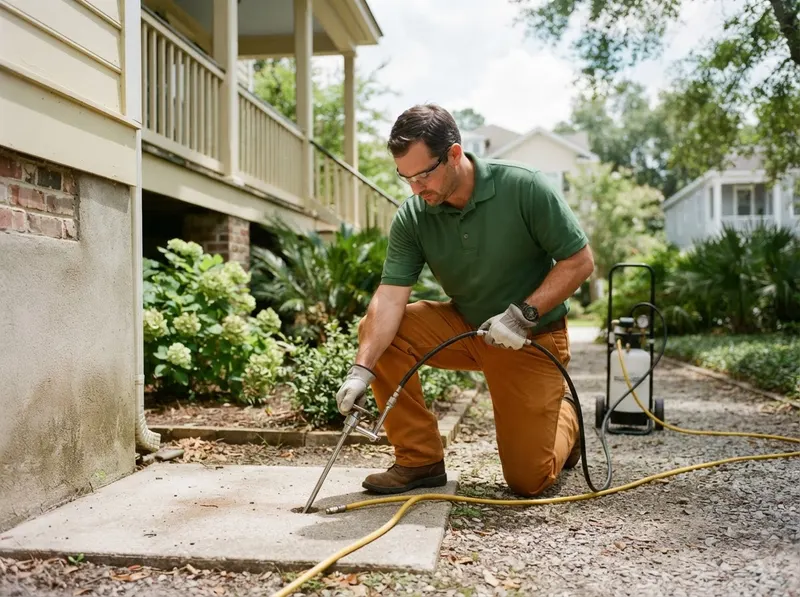
Subterranean and Formosan Termite Control in Charleston, SC

Subterranean and Formosan Termite Control

Formosan subterranean termites (Coptotermes formosanus) consume structural cellulose framing at three to four times the speed of native eastern subterranean termites, aggressively threatening historic timber structures throughout peninsular Charleston and surrounding river basins. Treatment protocols deploy non-repellent liquid termiticides applied in rigorous accordance with Clemson University Department of Pesticide Regulation standards, creating continuous treated soil zones around continuous brick foundations and crawl space support piers. Technicians supplement deep liquid soil trenching with low-profile subterranean bait monitoring stations spaced along structural perimeters at calibrated intervals, checking each station for subterranean activity, disrupting termite molting cycles using advanced chitin synthesis inhibitors, and protecting load-bearing heart-pine sills from catastrophic colonial damage.

Get a quote →
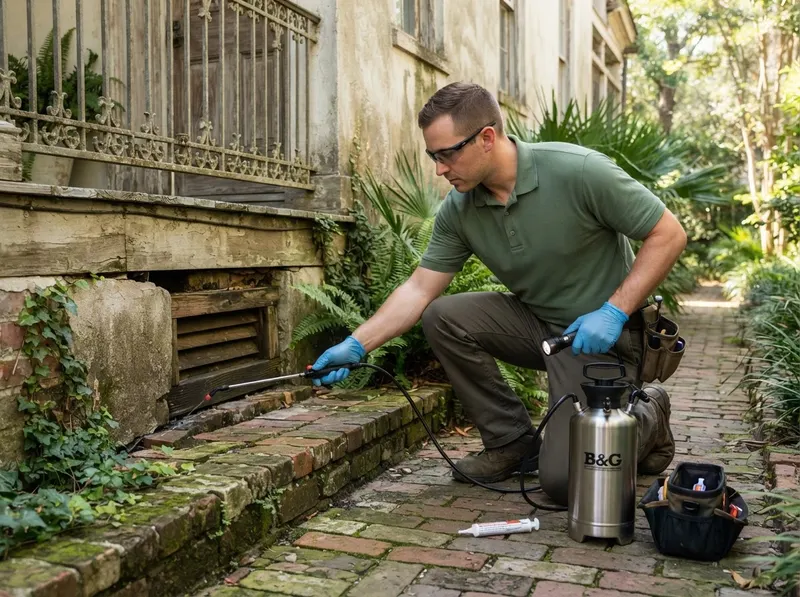
Palmetto Bug and American Cockroach Eradication in Charleston, SC

Palmetto Bug and American Cockroach Eradication

American cockroaches (Periplaneta americana), widely termed palmetto bugs across coastal South Carolina, thrive within mature coastal live oak canopies, cabbage palm boots, and humid subflooring before migrating indoors through gaps in architectural thresholds. Technicians execute complete structural inspections to locate exterior entry points, seal exterior utility penetrations using elastomeric sealants, apply microencapsulated exterior residual barriers along exterior masonry bands, and inject inorganic borate dust into void spaces behind kitchen cabinetry, pantry walls, and baseboards without airborne drift. These long-lasting desiccant dust formulations physically damage the insect epicuticle, causing rapid dehydration and preventing reproducing colonies from establishing harborage within residential living quarters.

Get a quote →
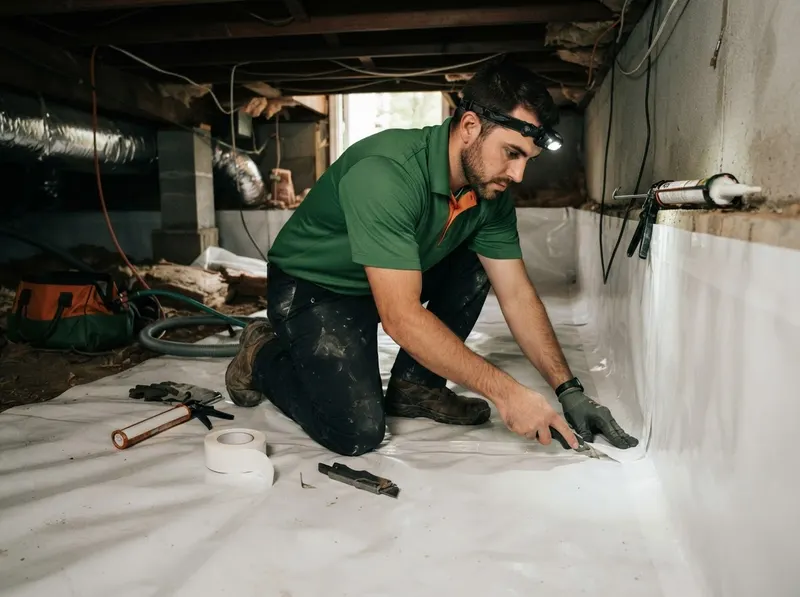
Crawl Space Encapsulation and Pest Exclusion in Charleston, SC

Crawl Space Encapsulation and Pest Exclusion

Unregulated ambient humidity beneath historic pier-and-beam foundations creates ideal harborage for wood-boring powderpost beetles, silverfish, and moisture ants that slowly undermine subfloor stability. Comprehensive crawl space exclusion protocols install heavy-duty 20-mil reinforced vapor barriers across exposed earthen floors, seal porous brick foundation vents, and integrate commercial dehumidification units compliant with South Carolina Department of Health and Environmental Control guidelines to depress relative humidity consistently below 60 percent. By starving moisture-dependent insects of essential water resources, the protocol protects framing timbers from fungal dry rot and subterranean insect incursions, eliminating the musty microclimates that invite seasonal pests into upper living quarters.

Get a quote →
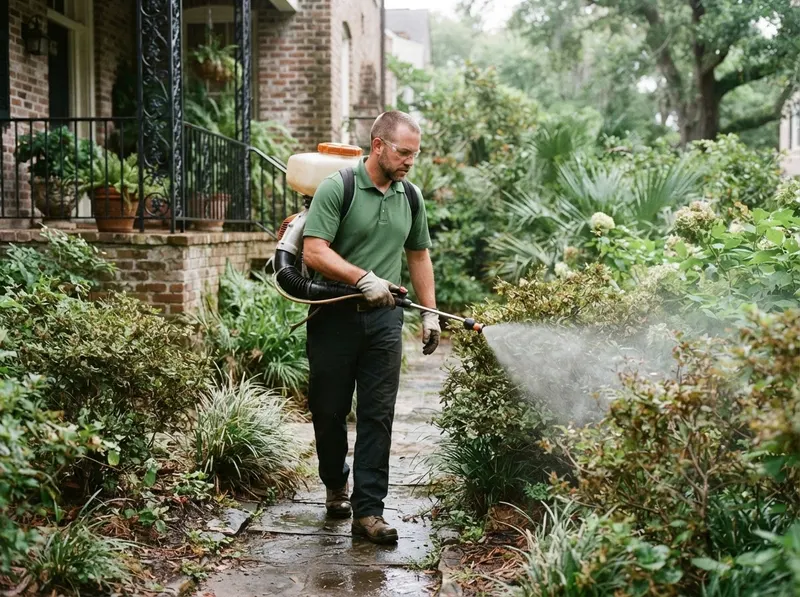
Lowcountry Mosquito and No-See-Um Suppression in Charleston, SC

Lowcountry Mosquito and No-See-Um Suppression

Salt marsh mosquitoes (Aedes taeniorhynchus) and biting midges (Culicoides), commonly called no-see-ums, emerge in dense populations from tidal mudflats, marsh margins, and shaded maritime foliage, disrupting outdoor sanctuary throughout warm Lowcountry months. Targeted suppression treatments deploy biological larvicides containing Bacillus thuringiensis israelensis (BTI) into non-fish-bearing standing water pools, bioswales, and drainage ditches in alignment with EPA mosquito control guidelines . Technicians supplement water-source management with ultra-low-volume foliar canopy barrier mists applied to perimeter shrubbery, palmetto boots, and property margins, knocking down adult biting insect populations while respecting local pollinator flight schedules.

Get a quote →
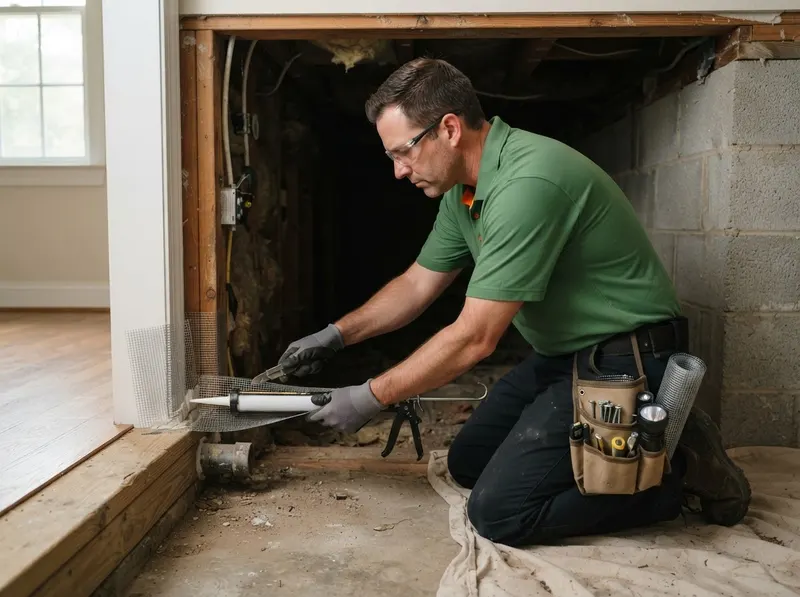
Marsh Rat and Rodent Interior Exclusion in Charleston, SC

Marsh Rat and Rodent Interior Exclusion

Roof rats (Rattus rattus) and marsh rice rats (Oryzomys palustris) regularly exploit overhanging maritime forest tree limbs and crawl space louvers to nest inside fiberglass attic insulation when autumn temperatures decline. Structural technicians perform comprehensive multi-point exclusion audits, identifying entry holes as narrow as one-quarter inch across brick piers, roof transitions, and utility lines. Exclusion work installs 1/4-inch heavy-gauge galvanized steel hardware cloth over crawl louvers, applies copper mesh and structural sealants to pipe chases, removes interior nesting contaminants according to strict sanitary protocols, and strategically positions tamper-resistant mechanical traps in unoccupied crawl spaces and attics to eliminate trapped rodents humanely.

Get a quote →
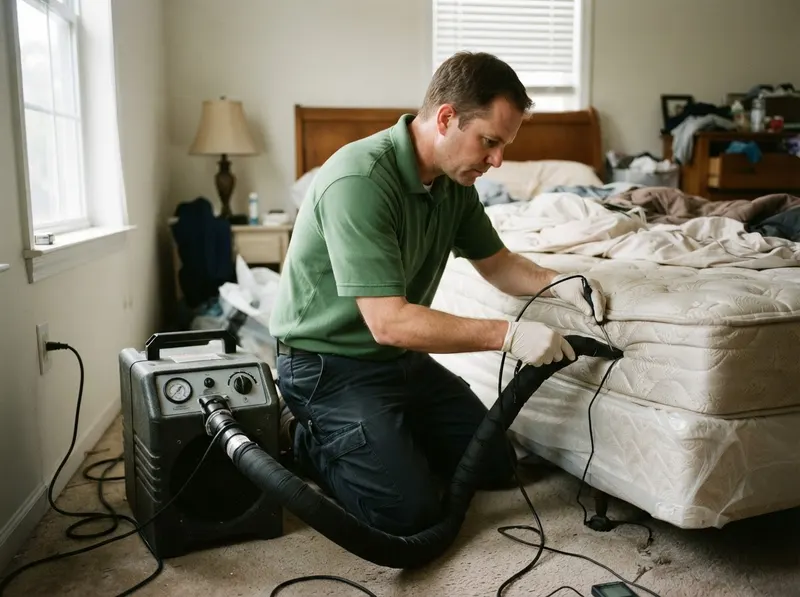
Bed Bug Thermal and Precision Remediation in Charleston, SC

Bed Bug Thermal and Precision Remediation

Short-term vacation rentals, downtown historic hospitality accommodations, and high-density residential properties encounter continuous bed bug (Cimex lectularius) introduction vectors from travel luggage and transient guest turnover. Clinical remediation utilizes precise structural heat treatments elevated above 122 degrees Fahrenheit alongside targeted insect growth regulators approved by the Centers for Disease Control and Prevention , eliminating all developmental life stages from viable eggs to reproducing adults in a single targeted deployment. Technicians continuously monitor multi-probe heat distributions across baseboards, mattress seams, upholstered furnishings, and wall cavities to ensure lethal thermal penetration without damaging delicate building furnishings.

Get a quote →
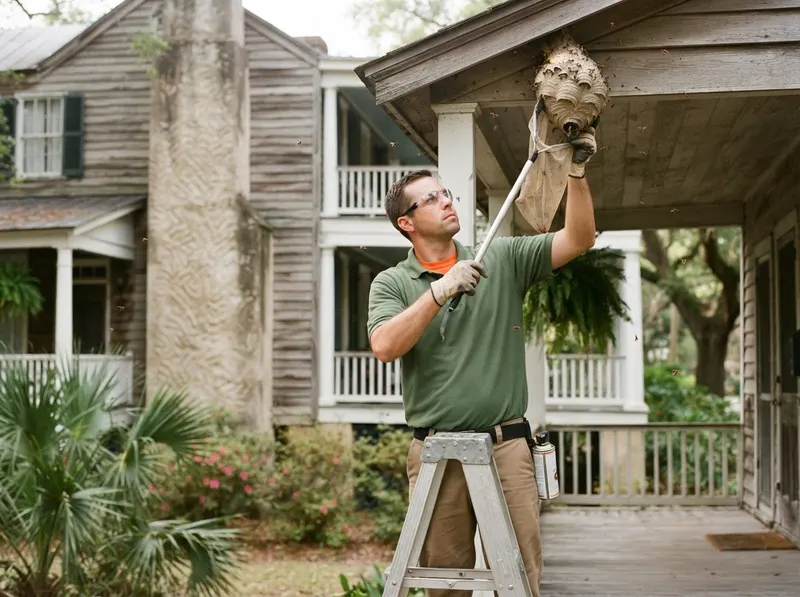
Stinging Insect and Paper Wasp Removal in Charleston, SC

Stinging Insect and Paper Wasp Removal

Red paper wasps (Polistes carolina), mud daubers, and aerial yellowjackets construct colonies beneath double piazzas, soffits, and historical standing seam metal roof overhangs, creating direct sting hazards for occupants and pets. Technicians physically remove exposed aerial combs, treat deep structural eaves with specialized botanical residual dusts, and inject targeted non-repellent materials beneath flashing and decorative cornices. Exterior treatments follow guidance from the Occupational Safety and Health Administration regarding elevated structural safety and protective gear, ensuring complete nest elimination while applying long-lasting repellent barriers that stop spring queens from establishing new nesting sites.

Get a quote →

German Cockroach Kitchen Remediation

High-density residential condominiums and commercial food preparation facilities require aggressive biochemical disruption of German cockroach (Blattella germanica) reproductive cycles. Clinical protocols integrate dual-action insect growth regulators (IGRs) that prevent nymphs from reaching reproductive maturity, paired with targeted bait matrices containing fipronil placed inside harborage crevices. Technicians conduct precision void flushing inside motor housings, cabinetry hinges, and plumbing chases, systematically breaking generational breeding cycles and ensuring ongoing sanitation alignment with municipal public health standards.

Get a quote →
The essentials

What Charleston customers should know

  • Initial diagnostic pest evaluations establish an on-site treatment plan starting at the baseline minimum of $200, with final costs confirmed during physical crawl space and perimeter inspections.
  • Formosan subterranean termite swarms peak heavily between late April and early June across Charleston, requiring structural bait installations and deep liquid barrier treatments to protect framing timbers.
  • American cockroaches, known locally as palmetto bugs, enter historic raised foundations through weeping mortar, sewer vent lines, and moisture-laden subfloors during sustained summer dew points.
  • Biting midges (no-see-ums) and coastal mosquitoes demand bi-weekly to monthly adulticide applications and larvicide treatments along tidal margins and standing water buffers from May through September.
  • Rodent exclusion programs seal entry thresholds along brick piers, rooflines, and crawl space louvers from late October through January when marsh rats migrate indoors toward insulated attics.
The FalconVale Insect Services standard

Why Charleston keeps calling us back

01

A clear, written price

You get a firm, itemized quote for your pest control service before any work begins, no surprises, no pressure.

02

Your property, protected

Careful prep, tidy work, and a full cleanup when we are done. We treat your home and belongings like our own.

03

One crew, start to finish

The same trusted, background-checked team from the first call to the final check.

Buyer's guide

Choosing the right pest control service pro

Property structural architecture, surrounding vegetative canopy, and ground moisture exposure dictate the appropriate pest management protocol across Charleston. If you occupy a historic single-house downtown with antique heart-pine framing, choose a dedicated continuous liquid soil trenching protocol paired with localized structural borate injections; if you manage a slab-on-grade contemporary home in West Ashley or Daniel Island, choose an exterior bait station network paired with quarterly perimeter microencapsulated barrier sprays. The operational trade-off centers on upfront installation labor versus recurring maintenance frequency: subterranean liquid trenches require extensive labor along perimeter masonry and brick foundations but deliver multi-year residual defense against aggressive Formosan colonies, whereas exterior baiting networks require zero trenching disruption to historical brick paths or landscaped beds but demand systematic quarterly monitoring rounds to detect active termite feeding.

For active interior cockroach infestations, targeted botanical desiccant dusts and non-volatile gel baits injected into wall voids deliver immediate knockdown without indoor aerosol drift or chemical odor, whereas exterior barrier bands stop perimeter migration at the foundation line but require reapplication after heavy tropical downpours. For biting marsh flies, greenhead horse flies, and no-see-ums, automated perimeter misting circuits deliver daily sanctuary along docks, outdoor piazzas, and screened porches, while periodic backpack misting lowers overall chemical volume but requires synchronized scheduling with Lowcountry tidal surges and adult insect emergence cycles. For rodent intrusions, comprehensive exclusion using heavy-gauge hardware cloth permanently removes structural access points but demands upfront carpentry time, whereas interior multi-catch mechanical traps offer rapid temporary population removal without addressing future autumn rodent migrations.

Investment

Pest Control Service cost and what drives it

Every project gets a firm, written price after a free on-site visit. Ranges below for orientation.

Comprehensive Initial Crawl Space & Perimeter Diagnostic$200 - $350
Quarterly Exterior Pest Defense & Barrier Maintenance$200 - $375
Targeted Termite Soil Barrier Trenching & Bait Network$950 - $2,800
Crawl Space Structural Vapor Sealing & Pest Exclusion$1,800 - $5,500
Seasonal Mosquito & Coastal Biting Midge Program (Monthly)$200 - $425
Complete Rodent Structural Exclusion & Harbor Sealing$450 - $1,650
Single-Room Bed Bug Thermal Eradication Protocol$750 - $1,500
Commercial Kitchen Integrated Pest Suppression (Monthly)$200 - $600
Whole-Structure Wood-Boring Beetle Borate Treatment$1,200 - $3,400
Perimeter Flea & Tick Yard Barrier Application$200 - $380
Annual Termite Warranty Renewal & Inspection Protocol$225 - $450
Severe German Cockroach Cleanout & Multi-Phase Flushing$350 - $850
Free, no-pressure estimate

Get it done right

Tell us about your pest control service job and we'll send a clear, written quote, usually the same day. Or just call and talk to a real Charleston pro.

(843) 268-6980

Get your free pest control service quote, Charleston

We only use your ZIP to check availability, no spam.

Where we work

Areas we serve near Charleston

FalconVale Insect Services pest control service team in Charleston, SC

Charleston's pest ecology is governed by its sub-tropical coastal climate, historic architectural stock, and extensive tidal waterways. Properties adjacent to The Battery and White Point Garden face constant subterranean moisture pressure from fluctuating coastal water tables, forcing palmetto bugs and marsh rats out of municipal stormwater conduits directly toward historic brick foundations and raised stone piers. Along the mature oak-canopied corridors near Hampton Park and the College of Charleston Campus, ancient live oaks draped in Spanish moss provide direct physical bridges for wood-infesting acrobat ants and roof rats to bypass ground-level defenses and access high structural soffits. Homes bordering salt marshes in West Ashley, James Island, and the Cainhoy Peninsula encounter relentless seasonal swarms of salt marsh mosquitoes and biting midges carried inland across the Arthur Ravenel Jr. Bridge corridor, necessitating treatments calibrated precisely to lunar tidal shifts and Lowcountry humidity indexes. Historic structures downtown along the Historic Charleston City Market and Charles Towne Landing State Historic Site feature antique heart-pine timbers that demand gentle, specialized borate preservation rather than aggressive chemical drilling, balancing architectural preservation with decisive insect defense across sensitive Charleston County maritime ecosystems.

South of BroadHarleston VillageWagener TerraceRadcliffeboroughWest AshleyDaniel IslandJames IslandCainhoy PeninsulaMount Pleasant Old VillageSullivan's IslandFolly BeachFrench Quarter
Questions

Common questions

How much does professional pest control service cost in Charleston, SC?
Professional pest control services in Charleston start at a baseline minimum of $200 for single targeted interventions or comprehensive diagnostic evaluations. Standard ongoing quarterly residential barrier defense ranges from $200 to $375 per service visit, covering common coastal pests like palmetto bugs, indoor ants, and spiders. Extensive structural interventions, such as subterranean termite liquid trenching, bait network installations, or crawl space pest exclusions, range between $950 and $5,500 depending on structural square footage, foundation type, soil moisture levels, and the severity of wood-destroying organism damage.
Why are palmetto bugs so prevalent in Charleston historic homes?
Palmetto bugs, the common regional name for American cockroaches, thrive naturally in the extreme coastal humidity and decaying maritime plant matter of coastal South Carolina. The prevalence of raised brick pier foundations, unsealed crawl spaces, and mature live oak canopies in historic neighborhoods like Harleston Village, Radcliffeborough, and the our team provides humid exterior harborages. When summer temperatures and dew points rise, these insects actively migrate indoors through foundation weeping mortar, dry plumbing traps, gaps around exterior utility penetrations, and loose tolerances around historic architectural joinery.
When is the peak season for Formosan termites in Charleston?
Formosan subterranean termite swarms peak heavily between late April and early June across peninsular Charleston and surrounding river estuaries. Swarming occurs on warm, humid evenings when ambient air temperatures exceed 80 degrees Fahrenheit, typically following late afternoon thunderstorms. During these dispersal flights, alates (winged reproductive termites) exit mature colonies in tens of thousands, heavily attracted to exterior porch illumination, street lamps, and interior window lighting. Once paired, these reproductives shed their wings and burrow into damp soil or moisture-compromised structural timbers to found new colonies.
Are pest control products safe for historic Charleston homes and waterways?
Modern pest management protocols utilize targeted, reduced-risk compounds registered under the EPA Federal Insecticide, Fungicide, and Rodenticide Act and managed in strict alignment with South Carolina Coastal Zone Management regulations. Exterior perimeter applications rely heavily on microencapsulated suspensions and mineral-based borate dusts that adhere tightly to structural masonry and crawl space timbers without vaporizing or leaching into adjacent marshlands, tidal creeks, or historic lime-based mortar. Technicians establish clear buffer zones around sensitive aquatic boundaries to safeguard local marine ecology.
How often should residential properties in Charleston be treated for pests?
Residential properties in Charleston typically require a quarterly treatment frequency to maintain active chemical barrier integrity against high coastal humidity and frequent tropical rainstorms that degrade surface treatments. However, properties directly bordering tidal marshes or experiencing severe seasonal mosquito, biting midge, or rodent pressure often require monthly applications from April through October. Comprehensive subterranean termite bait systems require annual physical inspections, while crawl space monitoring units should be checked semi-annually to confirm relative humidity levels remain below insect-breeding thresholds.
What is the difference between subterranean termites and Formosan termites in Charleston?
Subterranean termites native to South Carolina (Reticulitermes) form colonies numbering from several tens of thousands up to a few hundred thousand individuals and generally consume structural framing wood along the grain. Formosan subterranean termites (Coptotermes formosanus), introduced through naval shipping channels, establish super-colonies containing several million foraging insects. Formosan termites consume timber across structural grains at roughly three to four times the rate of native species, can construct secondary carton nests within wall voids without constant soil contact, and pose a substantially higher risk of rapid structural timber failure across historic properties.
What structural steps prevent marsh rats from entering historic crawl spaces?
Preventing marsh rat and roof rat intrusion requires rigorous physical exclusion combined with ground-level moisture reduction. Technicians install heavy-gauge, corrosion-resistant 1/4-inch galvanized steel hardware cloth over all perimeter crawl space vents, historical decorative iron grates, and access hatches. Exterior tree canopies extending within six feet of the roofline must be pruned back to eliminate elevated climbing bridges, and utility pipe penetrations through brickwork or siding must be packed with stainless steel mesh and sealed using elastomeric exterior compounds to prevent rodents from chewing into crawl spaces or attics.
Can pest control eliminate biting midges and no-see-ums along tidal docks?
While total eradication of biting midges (Culicoides) is biologically unfeasible due to the vast expanses of protected Lowcountry salt marsh breeding grounds, professional suppression protocols significantly depress local populations around residential living zones. Protocols combine targeted larvicide applications in localized stagnant freshwater runoff zones with automated or backpack barrier misting along perimeter vegetation and marsh borders. Applying fine droplet treatments to shrubbery where adult midges rest during daytime heat provides substantial relief for docks, piazzas, and outdoor entertaining spaces.
How does crawl space encapsulation deter wood-boring beetles?
Powderpost beetles and other structural wood-boring insects require elevated moisture levels within timber framing (typically above 14 to 16 percent moisture content) to sustain digestive processes and complete larval development. Crawl space encapsulation installs an impermeable 20-mil vapor barrier over exposed earth and pairs closed foundation vents with dedicated commercial dehumidification. Lowering crawl space relative humidity to between 50 and 55 percent dries framing timbers below the critical threshold required for wood-destroying insect survival, halting larval development and preventing future beetle emergence.
What should homeowners do immediately upon spotting a termite swarm inside?
If an interior termite swarm occurs, property owners should avoid spraying over-the-counter aerosol insecticides, which disperse the insects into adjacent wall voids and complicate professional inspection. Instead, turn off interior lights, collect a small sample of dead insects or shed wings in a sealed container or clear tape for species identification, and vacuum up the remaining alates before emptying the vacuum canister outdoors. Contact a certified pest professional immediately at (843) 268-6980 to schedule a diagnostic inspection of the crawl space, foundation sills, and wall framing to locate the structural emergence point.

Get started today

Free estimates for Charleston & the surrounding area.

Pest Control Service guides

How much does professional pest control service cost in Charleston SC?, Pricing Guide →What is included in a Charleston quarterly pest maintenance plan?, Complete Guide →How much does a Formosan termite treatment cost in Charleston SC?, Pricing Guide →Pest Control Service for Historic Charleston Woodwork →